Applications
What changes from one building type to the next — and what we spec for each.
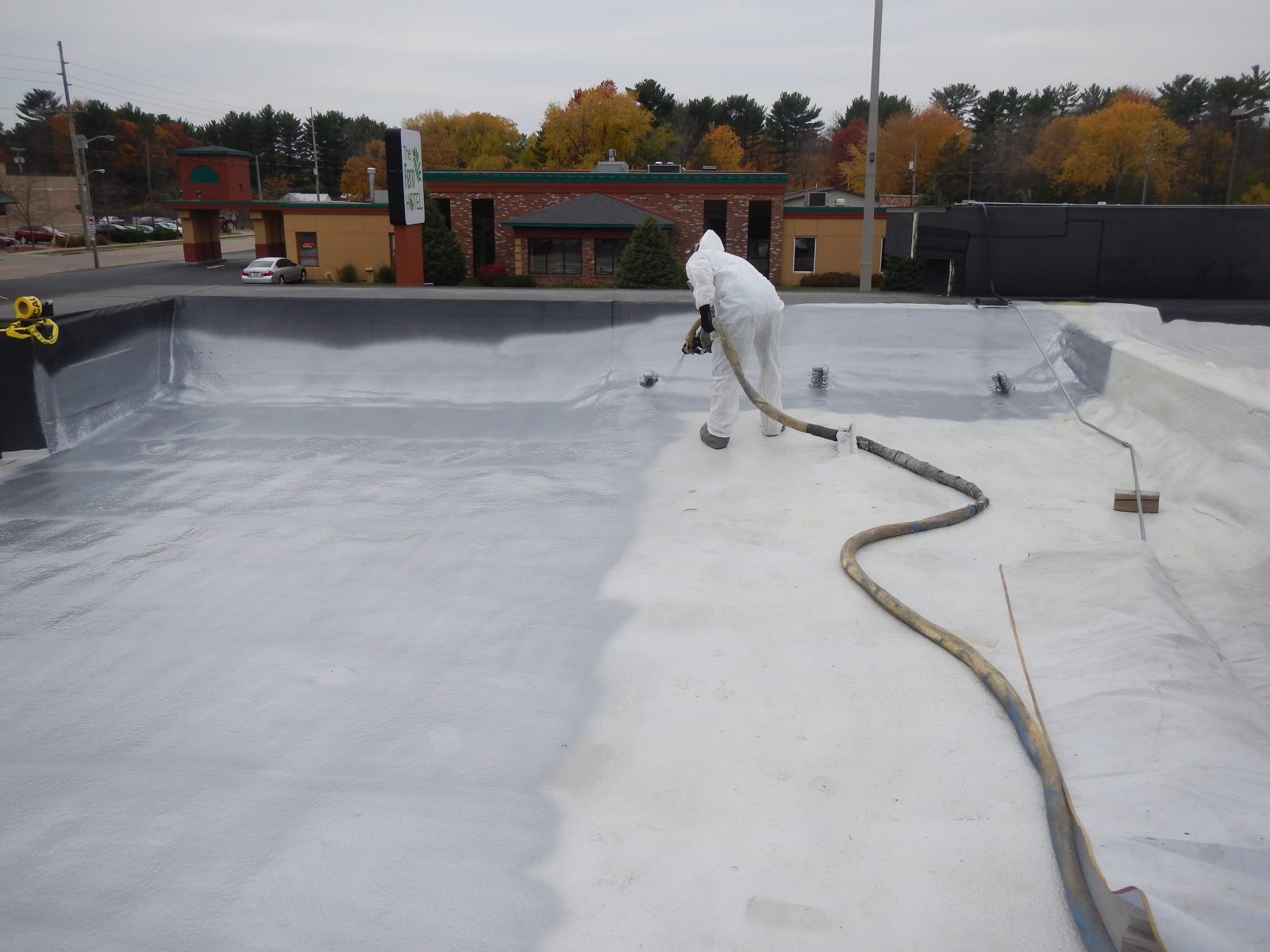
Warehouse & Distribution Roofs
Large roof areas, long panel runs, and rack storage underneath that cannot get wet or move. The economics are straightforward: a tear-off means tenting, phased shutdown, and disposal costs on a roof whose panel steel is usually still sound.
Long runs also mean the largest thermal movement of any building type — a 200-ft panel run cycles substantially, which is precisely why end-lap sealants fail there first and why an elastomeric membrane is the right answer rather than more sealant.
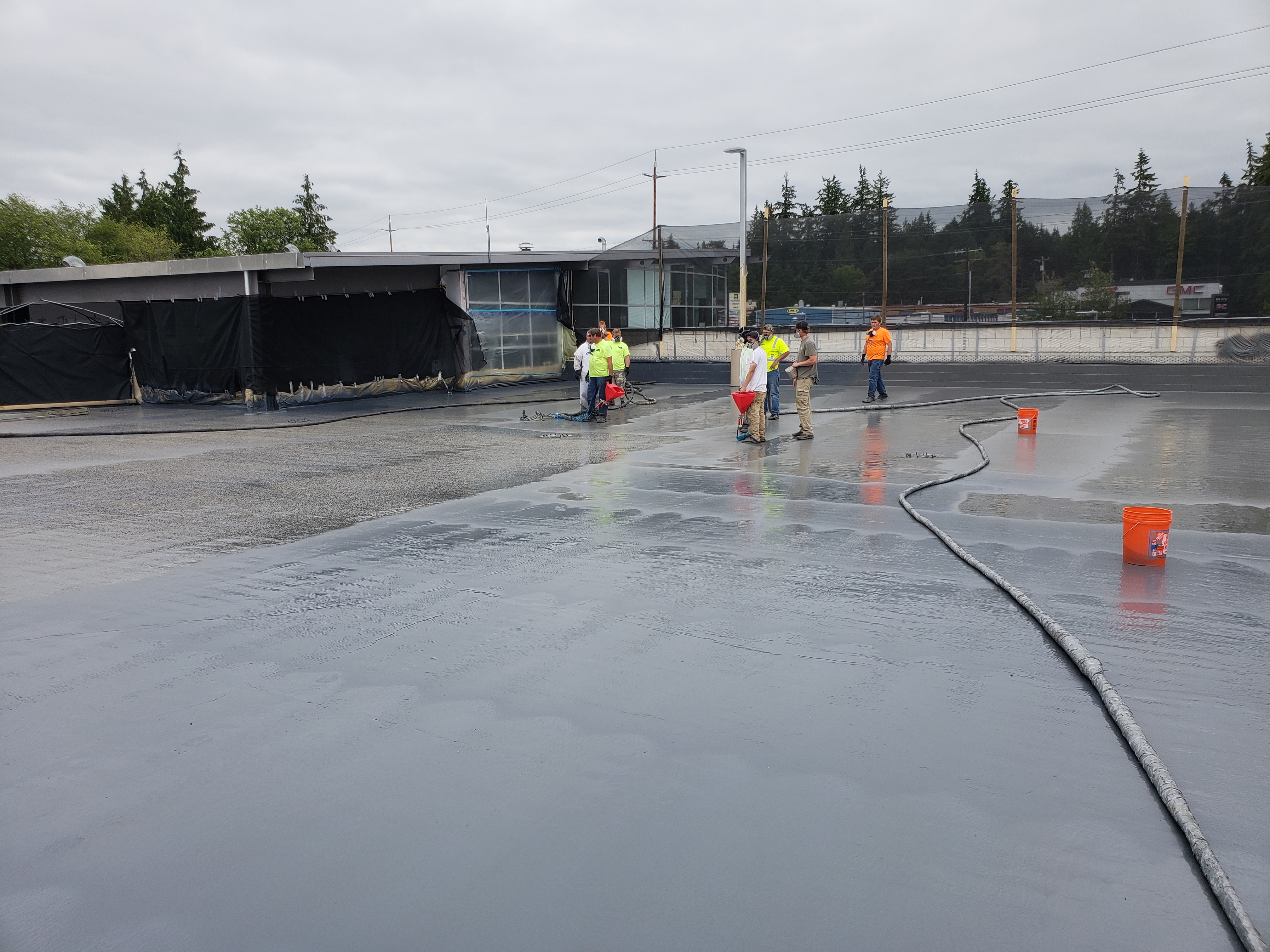
Work proceeds section by section over occupied space with no exposure at any point.
Spec: OR-80SLM at 60 mil field over 7001 Primer, OR7K stripe coat at all laps and fastener lines to 80 mil total, 100 mil at roof-to-wall and parapet transitions.
Agricultural Buildings & Livestock Barns
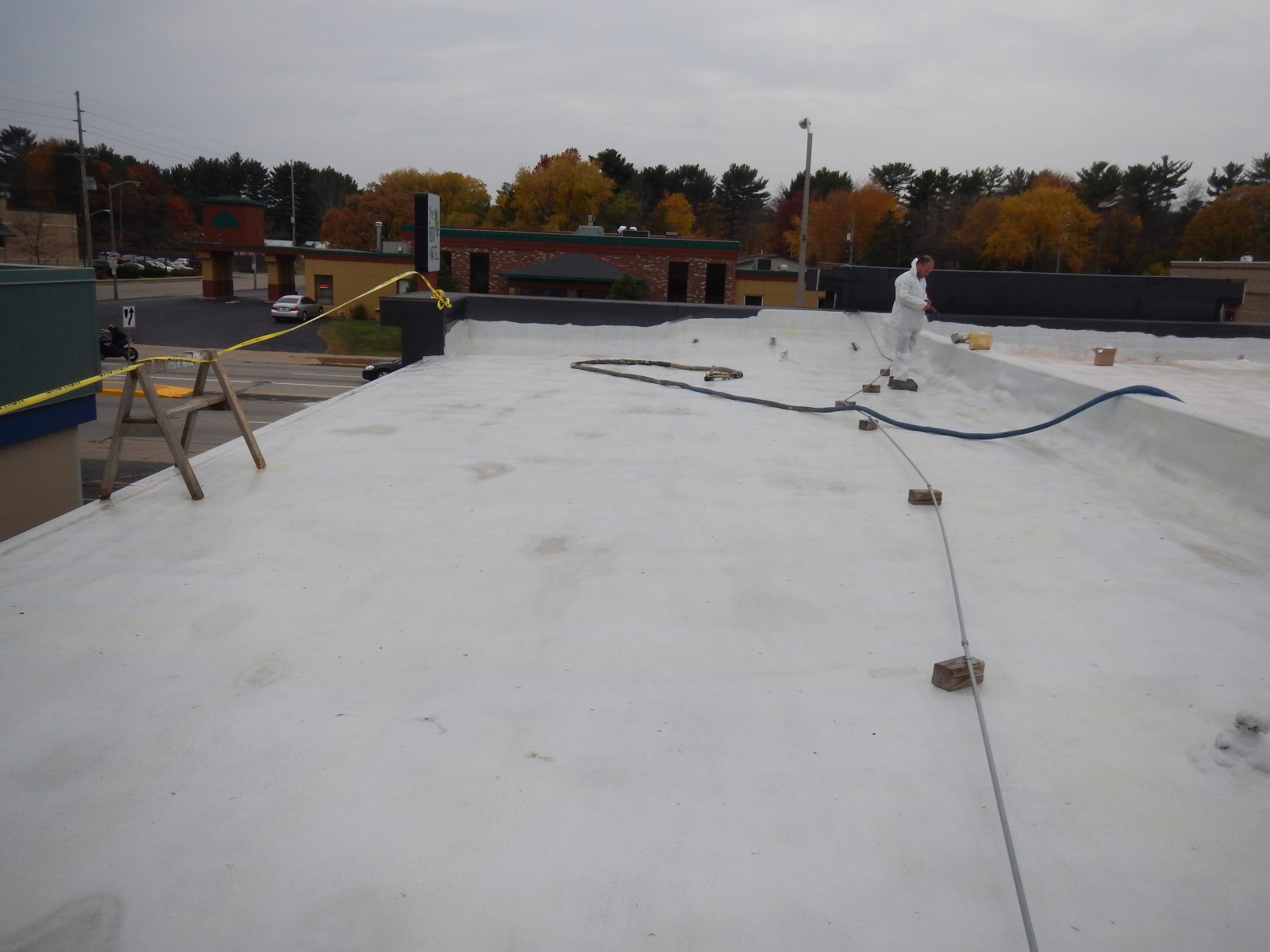
Farm roofs fight two things at once. From above: hail, wind, and decades of UV on panel that was often installed with the cheapest available fastener. From below: constant condensation, and in livestock buildings an ammonia atmosphere that attacks galvanizing from the underside where nobody inspects.
Poultry barns, dairy parlors, and hog buildings are the aggressive cases. Machine sheds and equipment storage are simpler but usually have the worst fastener condition because nobody has been on the roof in fifteen years.
Chloride and ammonia salt verification is not optional here — soluble contamination left under a membrane will blister it.
Spec: SSPC-SP3 at corroded areas, chloride below 7 µg/cm², 7001 Primer, OR-80SLM at 60 mil field with 80 mil at laps and ridge.
Cold Storage & Controlled-Atmosphere Buildings
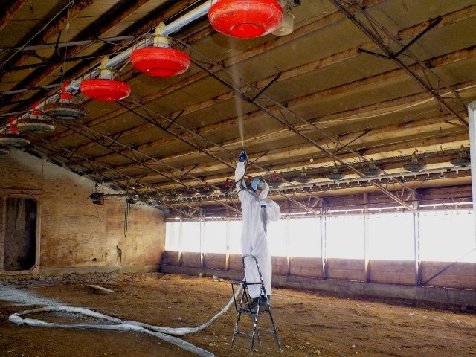
A cold storage roof is a vapor-drive problem before it is a water problem. The temperature differential across the assembly pushes moisture toward the cold side continuously, and any breach in the roof lets it condense inside the insulation where it destroys R-value and then the deck.
Potato and produce storage adds a second issue: the humidity levels those buildings are held at guarantee condensation on any cold interior metal surface.
A fully adhered, non-breathable polyurea membrane over the top of the assembly is a continuous vapor and water barrier with no laps for drive to exploit. On buildings where spray foam is added for R-value, OR-80SLM is also the standard protective topcoat over the foam.
Spec: OR-80SLM at 60 mil over primed panel, or at 60 mil directly over closed-cell foam where insulation is being added. 100 mil at all wall transitions.
Curbs, Penetrations & Transitions
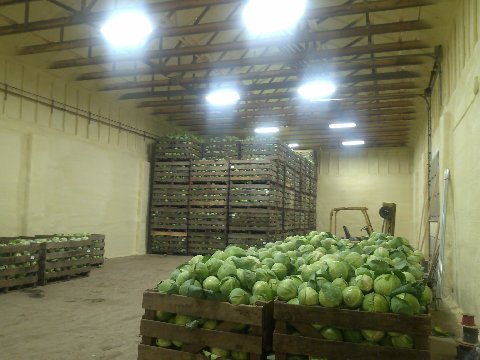
Every leak investigation on a metal roof ends up here. Rooftop units, exhaust fans, plumbing stacks, conduit racks, snow guards, and the roof-to-wall condition at every parapet and adjoining structure.
Conventional detailing means counterflashing, pitch pans, and sealant — all of which are mechanical assemblies that depend on a bead of something staying flexible and adhered for thirty years while the roof moves underneath them.
Sprayed detailing eliminates the assembly. The membrane runs up the curb, across the flange, and onto the field as one piece. Pitch pans get filled and encapsulated rather than topped off annually.
Spec: OR7K detail coat, then OR-80SLM built to 80–100 mil, wrapped a minimum of 8 in. up curbs and 12 in. up walls, with a mechanically terminated and sealed top edge.
Also Regularly Specified For
- Manufacturing and shop buildings — where interior process heat drives condensation on the underside of the deck
- Pole barns and machine sheds — the highest-volume ag application, usually driven by rust-jacked fasteners
- Standing seam roofs — clips and seams encapsulated without disturbing the panel attachment
- Corrugated and R-panel — the through-fastened profiles where fastener count is the whole problem
- Low-slope and near-flat metal — where ponding rules out any water-shedding repair approach
- Valley pans and internal gutters — the highest-volume water path on the roof and the least accessible to repair
- Spray foam roofs over metal — OR-80SLM as the UV and impact topcoat over closed-cell foam
- Metal wall panel and siding — same system, vertical, where wind-driven rain is getting through side laps
Have a Roof That Has Been Patched Three Times?
Tell us the panel type, the square footage, and where it is leaking. We will tell you honestly whether encapsulation is the right call or whether you are past it.
Ask a Roofing SpecialistRequest a Roof Spec & Budget
Tell us about your project and we will follow up with product details, technical data sheets, and pricing.